Sketch to Finished Piece: A Closer Look at How Maria Actually Makes Her Work
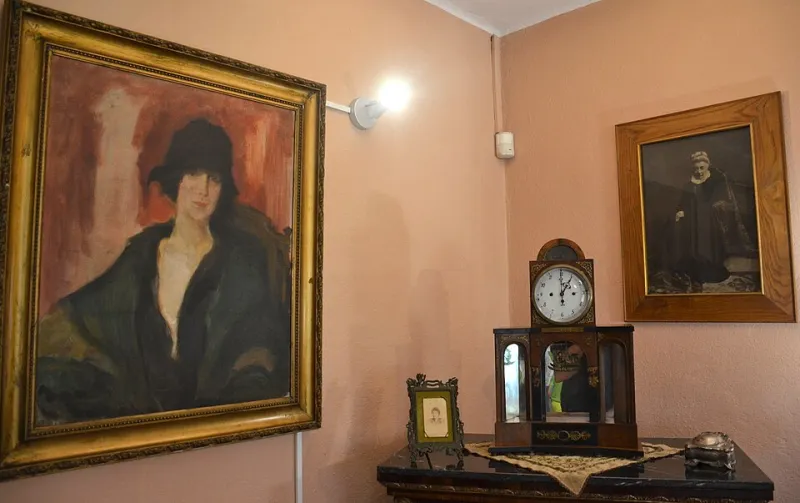
Photo: Silar, CC BY-SA 4.0, via Wikimedia Commons
If you've ever looked at something Maria created and thought, how did she even come up with that — you're not alone. Her work has this quality of feeling both completely original and somehow inevitable, like it couldn't have existed any other way. But nothing starts that polished. Behind every finished piece is a process that's messier, stranger, and more human than the final product lets on.
We're pulling back the curtain on how Maria actually works — from the spark of an idea to the moment she decides something is done.
It Starts With Noticing, Not Planning
One of the first things that stands out about Maria's creative process is that it doesn't begin at a desk with a blank document or a mood board. It begins earlier and less deliberately than that. Maria has talked about keeping what she calls a "noticing habit" — paying attention to the small things that snag her attention throughout the day and writing them down before she has time to second-guess whether they're worth keeping.
A weird light through a car window. A phrase someone used that felt off in an interesting way. A feeling that didn't have a name yet. These fragments go into a running archive — sometimes a note on her phone, sometimes a physical notebook, sometimes a voice memo she records while walking. The key is speed. She captures before she edits.
This practice matters because it separates observation from judgment. A lot of creative blocks happen when people try to evaluate an idea at the same moment they're generating it. Maria's system sidesteps that entirely. The noticing is one act; the making sense of it comes later.
The Messy Middle: Where Ideas Actually Get Shaped
Once Maria has enough raw material, she enters what she's described as the "collision phase" — putting different fragments near each other and seeing what happens. This isn't a formal brainstorm. It's more like rearranging furniture to see if the room starts to feel different.
She's mentioned that she often works across multiple projects simultaneously during this phase, not out of distraction but out of strategy. Ideas that aren't working in one context sometimes unlock something in another. The pressure of a single project can calcify thinking; having multiple things in motion keeps her mind loose.
For anyone who's ever stared at a half-finished project feeling completely stuck, this is worth noting. The block isn't always about that specific project. Sometimes you need to let something breathe and work on something else entirely — not as procrastination, but as part of the actual process.
Her Relationship With Reference Material
Maria is a voracious consumer of other people's work, but she's particular about how she uses it. She draws a clear line between inspiration and influence. Inspiration, in her framework, is something that gets you moving — it doesn't need to show up in the final product. Influence is deeper and slower, absorbed over years rather than pulled from a Pinterest board the night before a project.
She's talked about deliberately looking outside her own field for reference. When working on a visual project, she might spend time with music or poetry. When writing, she might look at photography or architecture. This cross-pollination keeps her from recycling the same visual or conceptual language that circulates within any single creative community.
For US audiences who've grown up in an intensely online world where references spread and flatten incredibly fast, this approach is quietly radical. The internet tends to homogenize aesthetics. Maria's habit of reaching sideways into other disciplines is part of what keeps her work feeling distinct.
Dealing With Creative Blocks (Without Forcing It)
Every creator hits walls, and Maria doesn't pretend otherwise. What's interesting is her philosophy around those moments. Rather than treating a block as a problem to be solved through sheer effort, she treats it as information — a signal that something in the approach isn't working, not that she's out of ideas.
Her go-to moves during a block aren't particularly glamorous: long walks without headphones, cooking something that requires attention, reading something completely unrelated to what she's working on. Physical movement shows up a lot in how she describes breaking through stuck moments. There's real neuroscience behind this — movement shifts the brain out of the kind of narrowed focus that produces blocks in the first place — but Maria seems to have arrived at it through intuition rather than a productivity book.
She's also talked about giving herself permission to make something bad. Not as a warm-up exercise, but as a genuine release valve. When the stakes of a project start to feel suffocating, she'll deliberately create something low-effort and unserious, just to remind herself that making things is supposed to feel like something.
The Refinement Phase: Knowing When to Stop
One of the hardest skills in any creative field is knowing when something is done — and Maria has developed a specific test for this. She asks herself whether any further change would be for the work or for the audience's perception of the work. If she's tweaking something because it genuinely needs it, she keeps going. If she's tweaking it because she's nervous about how it'll land, she stops.
This distinction sounds simple but it cuts deep. A lot of over-polished, over-produced creative work comes from that second kind of tweaking — the anxiety-driven kind that sands down all the interesting edges. Maria's willingness to leave things slightly unresolved, slightly alive, is a big part of what makes her work feel real rather than manufactured.
She's also talked about the role of time in refinement. She tries to let a finished draft sit before she calls it done — a day if she's on deadline, longer if she has the luxury. Distance reveals things that close attention misses.
What You Can Actually Take Away
Maria's process isn't a blueprint you can copy exactly, and she'd probably be the first to say so. But the underlying principles — notice before you judge, work across multiple things, reach outside your own field, treat blocks as signals, and know the difference between real refinement and anxiety editing — these translate.
The work doesn't come from nowhere. It comes from habits, from attention, and from a genuine willingness to stay in the mess long enough for something real to emerge. That's the part no one sees in the finished product. But now you know it's there.