Playing the Long Game: What Maria's Business Decisions Tell Us About Surviving — and Thriving — as an Independent Creator
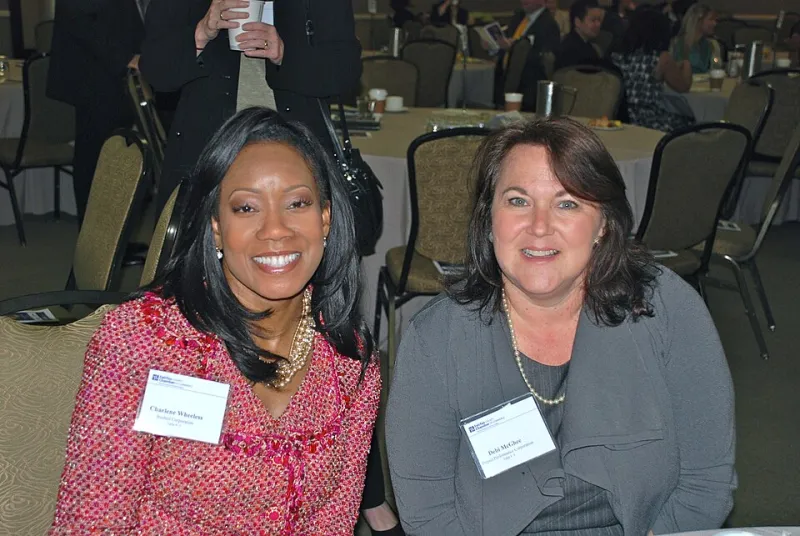
Photo: Fairfax County Chamber of Commerce, CC BY 2.0, via Wikimedia Commons
The creator economy has a retention problem. People blow up, they grind hard, they burn through their best ideas chasing growth, and then somewhere around year three or four, the whole thing starts to wobble. The audience drifts. The income gets inconsistent. The work starts to feel like a job they never actually applied for.
Maria has been watching that cycle play out around her for years — and she's been quietly, deliberately building something designed to avoid it. The decisions she's made about money, products, and how she structures her work aren't flashy. They don't generate the same buzz as a viral moment or a record-breaking launch. But they add up to something more valuable: staying power.
Owning the Foundation
One of the first things that stands out about how Maria operates is her focus on ownership. In an industry where it's easy to build your whole career on rented land — a platform's algorithm, a sponsor's goodwill, a trend's momentum — she's consistently moved toward things she actually controls.
That shows up in how she thinks about her audience relationship. Email lists over follower counts. Direct community over passive viewership. Products she owns over affiliate commissions. None of this is revolutionary in theory, but the discipline required to actually execute it — especially when the short-term math often favors platform dependency — is real.
For aspiring creators watching from the outside, this is probably the most transferable lesson: the metric that looks impressive on a dashboard isn't always the one that pays your rent when a platform changes its algorithm or a brand partnership falls through. Maria seems to have understood this earlier than most.
Diversification Without Dilution
Here's the trap a lot of creators fall into when they try to diversify: they spread so thin that nothing they do feels like them anymore. The merch is generic. The course is rushed. The product feels like an afterthought. Audiences can tell, and they pull back.
What makes Maria's approach different is that her expansions tend to feel like extensions of what already exists, not departures from it. When she moves into a new format or revenue stream, there's usually a clear line back to the core of what she does and who she is. It doesn't feel like she's chasing money — it feels like she's finding new shapes for something she was already doing.
That coherence is harder to manufacture than it looks. It requires a pretty clear internal compass about what you stand for and what you don't. Maria has talked, in various ways, about knowing her "no" list — the deals, the formats, the collaborations that would compromise the thing that makes her work meaningful to people. That clarity is actually a business asset, even if it doesn't show up on a balance sheet.
The Patience Play
American hustle culture has a complicated relationship with patience. We celebrate the overnight success story, the rapid scale-up, the creator who went from zero to a million followers in a year. Maria's trajectory doesn't fit that template neatly, and that might be exactly why it's worth paying attention to.
Some of her most significant business wins have come from things she'd been building quietly for a long time before they paid off visibly. A product developed over months of iteration rather than rushed to market. A community nurtured through consistent engagement rather than growth-hacked to a vanity number. A creative relationship deepened over years rather than leveraged for a quick collab bump.
This is the part of creator economics that doesn't get enough airtime: the compounding effect of showing up consistently, building trust slowly, and resisting the pressure to monetize everything the moment it gets attention. Maria plays a longer game than most, and her audience — the ones who've been around long enough to watch it unfold — seems to genuinely respect her for it.
What She Won't Do (And Why That Matters)
Boundaries get talked about a lot in wellness contexts, but in business, they're actually a strategic tool. Every time Maria declines something — a brand that doesn't fit, a format that feels off, a partnership that would compromise her editorial voice — she's making a statement about what her work is worth and what it's for.
That kind of selectivity builds credibility over time. When she does say yes to something, her audience trusts it more because they've seen her say no. The signal-to-noise ratio stays high. The relationship between her and her fanbase stays grounded in something real rather than eroding into a parade of sponsored content that nobody asked for.
For creators trying to figure out how to monetize without alienating the people who showed up for the work, Maria's track record here is instructive. The answer isn't to avoid monetization — it's to be deliberate enough about it that your audience can still tell the difference between what you believe in and what you're just being paid to say.
Building for What Comes Next
The creator economy is still young enough that nobody really knows what it looks like in twenty years. Platforms shift. Audience behaviors evolve. The tools change faster than most people can keep up with. Building something durable in that environment requires a kind of strategic flexibility — staying adaptable without losing the thread of who you are.
Maria seems to be betting on herself more than on any particular platform or trend. Her business decisions, taken together, read like someone who's thought seriously about what she wants her work to look like not just next quarter, but next decade. That's a rare orientation in an industry that often rewards the sprinters.
For anyone trying to build something that lasts in the independent creator space, that might be the most useful thing to take away: not a specific tactic or revenue model, but a posture. Build like you're planning to still be here in ten years. Make decisions your future self will be able to live with. Protect the thing that makes your work worth showing up for.
Maria's universe is still expanding — and she seems to be building it to last.