When the Well Runs Dry: Maria Gets Honest About Creative Block, Burnout, and Finding Her Way Back

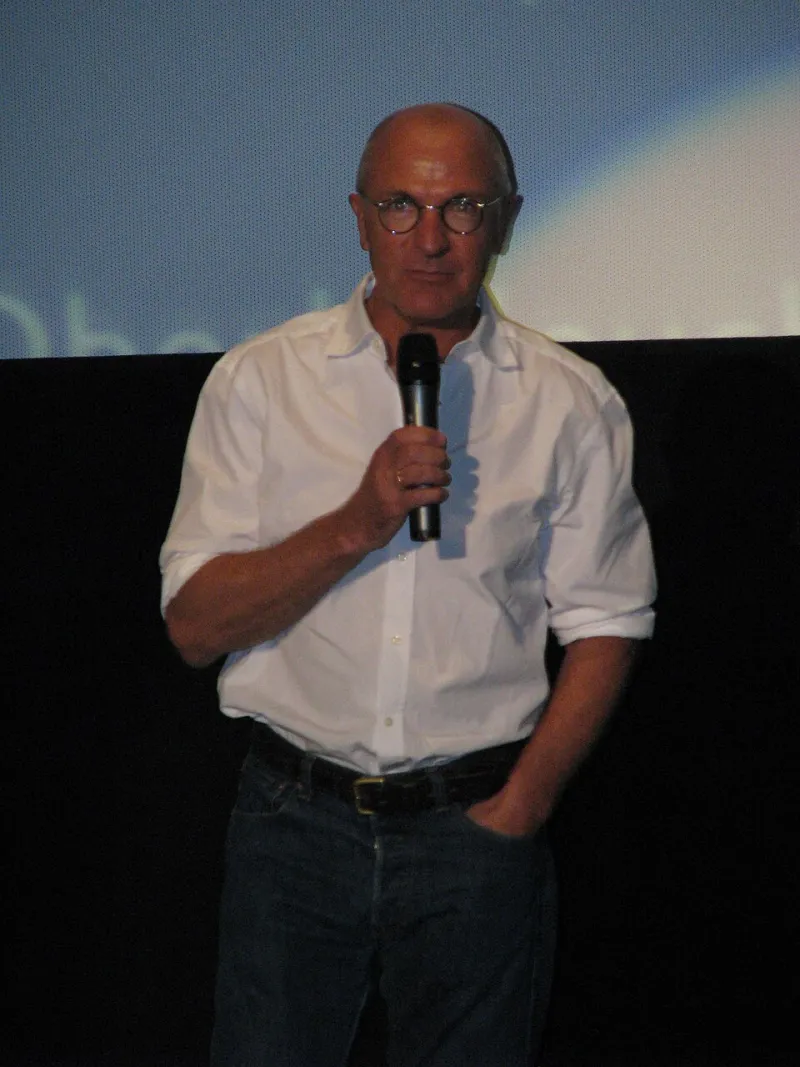
Photo: Varvara Kless-Kaminskaia, CC BY-SA 4.0, via Wikimedia Commons
There's a version of this conversation that would be easier to write. In that version, Maria talks about her creative process in the past tense — the block she had that one time, the lesson she learned, the tidy resolution. She'd share a quote that would look good on a graphic, and we'd all move on.
But that's not the conversation we had.
What Maria actually described was messier, more ongoing, and — if we're being honest — more useful than any highlight-reel version of creative struggle. Because the block, as she tells it, isn't a chapter that closes. It's something she navigates, loses to, and finds her way through on a rotating basis. And she's tired of pretending otherwise.
"I think people imagine that if you're a creative person, making things feels natural all the time," she says, settling into the conversation like someone who's been waiting to have it. "And sometimes it does. But sometimes I sit down to work and I feel like I'm trying to start a car with no battery. Nothing. Just this awful silence where the ideas are supposed to be."
What a Block Actually Feels Like From the Inside
Creative block is one of those things that sounds manageable until you're inside it. From the outside, it looks like procrastination or maybe laziness — a problem of motivation. From the inside, Maria says, it feels closer to a kind of grief.
"You know what you're capable of. You've done it before. And then you can't access it, and you don't know why, and you start to wonder if that version of you was a fluke," she says. "That's the part nobody talks about. It's not just 'I don't have ideas right now.' It's 'What if I never have ideas again?' That thought is terrifying."
For Maria, the blocks tend to arrive in patterns she's slowly learning to recognize. They often follow a period of high output — a run of work that felt genuinely good, that connected, that she's proud of. The comedown from that high is sometimes steeper than she expects.
"After something lands well, there's this pressure to immediately do it again but better," she explains. "And that pressure is the enemy of creativity. You can't create freely when you're performing. You end up making stuff that's technically fine but feels hollow, and you know it, and your audience knows it, even if they can't name exactly why."
The Pressure of Making Work While Being Watched
Here's the specific wrinkle that most creative advice doesn't account for: Maria doesn't make work in private. She makes it in front of millions of people who are paying attention, who have expectations, and who — with the best of intentions — sometimes make the silence feel louder.
"When you haven't posted in a while, people notice," she says. "And most of them are sweet about it. They're checking in, they're saying they miss the work. But that sweetness still lands like weight sometimes. Because now it's not just about whether I can get out of my own head — it's about not wanting to let people down."
That dynamic, she's found, can turn a manageable dry spell into a full spiral. The longer the gap, the higher the stakes feel, the harder it becomes to start, which makes the gap longer. She describes it as a "pressure loop" that she's had to develop specific tactics to break.
One of them is deceptively simple: she makes something she never intends to share.
"I'll give myself permission to make the worst, most embarrassing thing I can think of," she says, laughing. "Something I would never post. Something that's just for me. And usually, somewhere in the middle of that terrible thing, something real shows up. Because I stopped trying."
Pushing Through vs. Stepping Back — and How She Knows the Difference
One of the harder lessons Maria says she's had to learn is that "push through it" is not always the right answer. American productivity culture tends to romanticize grinding through discomfort, and creative spaces aren't immune to that mythology. But she's come to believe that there are two distinct types of blocks, and they require opposite responses.
"There's the kind where you just need to show up and do the work anyway, even if it's bad," she says. "You're just scared or in a rut, and motion is the cure. But there's another kind where the block is your brain's way of telling you that something is wrong — that you're burnt out, or that you've lost the thread of why you're doing this, or that you need to go live your actual life for a minute so you have something to say again."
Learning to tell the difference has taken time, and she admits she still gets it wrong. "I've pushed through when I should have rested and made work I'm not proud of. I've also rested when I should have pushed through and let the gap get so long that coming back felt impossible. It's not a science."
What she's landed on is a loose set of internal questions she asks herself before deciding which mode she's in. Is she physically exhausted? Is she avoiding the work or genuinely empty? Does the idea of making something feel frightening or flat? Fear, she's learned, usually means push. Flatness usually means rest.
The Mental and Emotional Toll Nobody Accounts For
Creativity is often discussed as if it's a purely intellectual exercise. Maria would like to gently push back on that.
"Making things that are personal, and then putting them in front of people, and then waiting to see how they land — that takes something out of you," she says. "It's emotional labor. And when you're blocked, it's not just your creativity that suffers. Your mood shifts. You get irritable or withdrawn. You start questioning not just the work but yourself."
She's been deliberate in the last year about building what she calls "recovery infrastructure" around her creative practice — things that have nothing to do with output. Long walks. Cooking. Spending time with people who don't know or care what she does for a living. Reading books that aren't relevant to anything. Watching movies with no intention of learning from them.
"The best creative advice I ever got was that you have to have a life outside the work, or eventually the work has nothing to pull from," she says. "That sounds obvious. But when you're in the middle of it, when the platform is always there and the notifications don't stop, it's actually really hard to just... be a person."
Coming Back to the Work
For Maria, the return from a block is rarely dramatic. It doesn't announce itself. She doesn't wake up one morning flooded with inspiration. It's quieter than that — a small idea that doesn't immediately feel stupid, a line that surprises her, a morning where sitting down to work doesn't feel like walking toward something she's afraid of.
"It sneaks back in," she says. "And when it does, I try not to make a big deal of it. I just work. Because I've learned that if I stop and go 'Oh thank God, it's back,' I'll scare it off again."
She pauses, then adds something that feels like the whole point of the conversation: "I used to think the block was the enemy. Now I think it's just part of the process. It's information. It's telling me something, even when I don't know what yet."
Maybe that's the most honest thing she's said today. And honestly, it's enough.