She Went First: How Maria's Openness Changed What Fans Expect From Every Creator They Follow
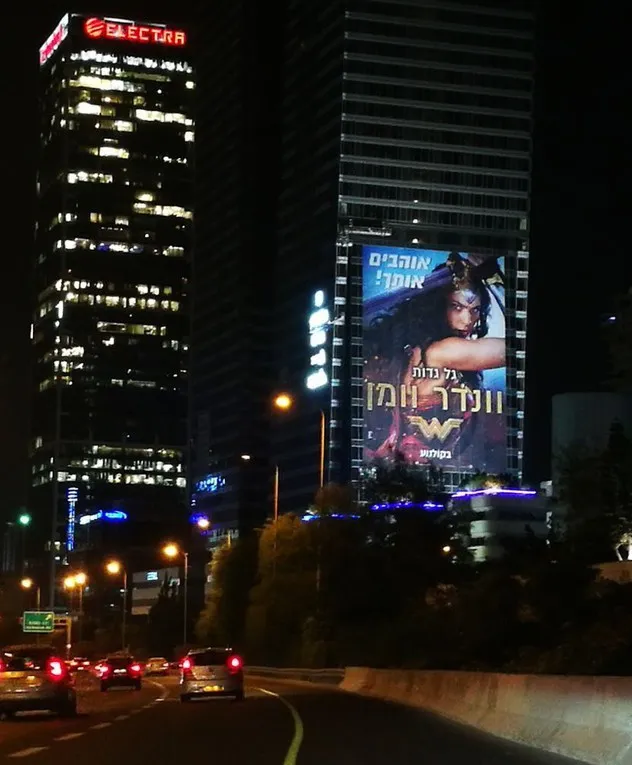
Photo: Raphael Delouya, CC BY-SA 4.0, via Wikimedia Commons
There's a version of this story where Maria made a calculated brand decision to lean into vulnerability. Where a team of strategists sat around a table and decided that "authentic" was the new aesthetic. Where the tears, the doubts, the messy in-between moments were all carefully packaged and scheduled for optimal engagement.
That's not this story.
What actually happened was quieter and, honestly, more interesting. Maria just... started telling the truth. And the ripple effects of that choice are still moving through the creator industry in ways that nobody — not even the experts — fully saw coming.
What "Going There" Actually Looks Like
For anyone who's been in the Maria 6 community for a while, you already know the moments we're talking about. The post where she admitted she had no idea what she was doing. The video where she sat with the camera rolling while she worked through something she hadn't resolved yet. The caption that didn't wrap up neatly with a lesson or a silver lining — it just said this is where I am right now.
None of it was dramatic. That's kind of the point.
Dr. Leah Castillo, a media psychologist based in Chicago who studies parasocial relationships and digital identity, puts it plainly: "What Maria did wasn't just share vulnerability — she normalized the process of being uncertain. That's a fundamentally different thing from a creator saying 'I struggled but here's how I overcame it.' She removed the redemption arc. And audiences responded to that in a massive way."
The data backs this up. Engagement on posts where Maria shared something unresolved or still-in-progress consistently outperformed her more polished content — not because people love watching someone struggle, but because they recognized something real in it.
The Comparison Effect
Here's where things get complicated for the broader creator world. Once Maria's audience started experiencing that level of openness, something shifted in how they engaged with everyone else they followed.
Creators who work in adjacent spaces — lifestyle, fashion, wellness, art — have noticed it. "There's been a change in the comments," says one mid-size creator who asked to remain anonymous. "People are more likely to call out when something feels rehearsed now. They're more skeptical of the perfect setup, the tidy narrative. I don't think they were always like that."
That skepticism has a name in marketing circles. Brand strategist Marcus Webb, who consults with digital creators in New York and LA, calls it "the authenticity gap" — the space between how polished a creator appears and how genuine their audience believes them to be. "That gap used to be tolerable," he says. "Audiences kind of expected a certain level of performance. But creators like Maria have compressed that tolerance significantly. The gap that was acceptable three years ago is now a red flag."
In other words, Maria didn't just raise the bar for herself. She raised it for everyone — whether they were ready for that or not.
When Established Creators Try to Catch Up
The scramble has been something to watch. Across platforms, you can see creators who built their brands on aspiration and polish suddenly introducing "real talk" segments, vulnerability b-roll, and confessional-style content that feels... off. Not because the emotions aren't genuine, but because the framing is too neat. The lighting is still perfect. The struggle has a three-part structure and a merch link in the bio.
Audiences notice. They notice immediately.
"You can't retrofit authenticity," Dr. Castillo says. "It's not a content format. It's a relationship style. When creators who've spent years projecting invulnerability suddenly try to pivot to openness, audiences experience it as a performance of vulnerability rather than the thing itself. And that actually erodes trust faster than staying in the polished lane would have."
This is the paradox Maria accidentally created: by being genuinely open, she made it harder — not easier — for others to replicate the effect. The very thing that made her approach powerful is the thing that can't be reverse-engineered.
What Fans Are Actually Asking For Now
Spend any time in the Maria 6 community and you'll hear a version of the same thing: I feel like she actually sees me. That's not a coincidence, and it's not just about Maria's personality. It's about what her openness creates in return.
When a creator admits they don't have it figured out, they give their audience permission to feel the same way. When they share something unresolved, they make space for the people watching to sit with their own unresolved things. That's not content strategy. That's connection.
And once you've felt that kind of connection with a creator, everything else starts to feel like a transaction.
Marketing consultant Dana Frey, who works with emerging creators in the wellness and lifestyle space, has watched her clients grapple with this shift in real time. "I have clients who are genuinely great at what they do, but they've built brands around a kind of aspirational distance. Now their audiences are asking for something different, and they don't know how to give it without feeling like they're losing what made them them. It's a real identity question, not just a content question."
The Standard Nobody Asked For (But Everyone Needed)
Here's the thing about Maria's influence on this conversation — she didn't position herself as a thought leader on authenticity. She didn't write a manifesto or host a summit. She just kept showing up as herself, in whatever state that happened to be, and let the work speak.
And in doing that, she accidentally set a standard that is now reverberating across the industry.
Other creators are being asked to meet it. Some will. Some won't. Some will try and miss. But the standard exists now, and it exists because one person decided that the performance of having it together was less interesting — and less sustainable — than the reality of figuring it out.
For the people who've been here watching Maria do exactly that, none of this is surprising. You already knew.
The rest of the internet is just catching up.